1. What Defines a True Hybrid Mattress (and Marketing Traps to Avoid)
Key Finding: A genuine hybrid mattress must have a substantial steel innerspring support core (minimum 6-8 inches of pocketed coils) paired with at least 2 to 4 inches of dedicated high-density comfort materials.
In the current bedding marketplace, the term 'hybrid' is frequently misused. Some budget manufacturers place a thin 0.5-inch sheet of low-density quilting foam over a basic open-coil Bonnell unit and label it a 'luxury hybrid'. A true performance hybrid requires individually encased pocket springs that move independently, capped with substantial therapeutic comfort layers that cushion pressure points while preventing direct coil sensation.
Unlike traditional innerspring beds-which rely on interconnected helical wires that transfer motion across the entire mattress surface-modern pocketed coil hybrids isolate vibration at the source while preserving responsive airflow. Compared to all-foam beds, hybrids provide superior air circulation through the open coil chamber and deliver substantially stronger perimeter support when sitting or sleeping near the edge.
2. Pocketed Coil Anatomy: Gauges, Zoned Resistance & Turn Counts
Key Finding: The steel coil core is the engine of any hybrid. Coil wire thickness (gauge), coil shape, and zoning configuration determine how long the bed will maintain its shape before sagging.
Coil gauge is measured inversely: a lower number indicates a thicker, stiffer wire, while a higher number indicates a thinner, more pliable spring. Most quality hybrid mattresses employ 13.5 to 16-gauge steel. The most sophisticated models utilize dual-gauge zoning: placing thicker 13.5-14.5 gauge coils beneath the pelvis and along the perimeter, while using 15-16 gauge coils under the shoulders for deeper pressure relief.
Total coil count is also important, but only up to a point. In a standard Queen size, a count of 800 to 1,200 pocketed coils provides optimal contouring. Claims of 3,000+ coils almost always indicate the addition of tiny 1-inch 'microcoils' in the upper comfort stack rather than a denser base unit. Turn count-the number of complete spiral revolutions in each spring-influences responsiveness; 5 to 7 turns provide progressive compression that softens initial contact before pushing back firmly against heavy body weight.
| Parameter | Wire Thickness | Feel & Response | Ideal Body Weight & Application |
|---|---|---|---|
| 13.0 - 14.0 Gauge | 1.94 - 1.83 mm | Very firm, high pushback | Heavy sleepers (230+ lbs) and reinforced perimeter edge support |
| 14.5 - 15.0 Gauge | 1.63 - 1.54 mm | Balanced medium-firm tension | Lumbar support zones and average back/side sleepers (130-230 lbs) |
| 15.5 - 16.0 Gauge | 1.45 - 1.37 mm | Plush, high contouring | Shoulder relief zones and lightweight side sleepers (<130 lbs) |
Pocket Coil Support & Body Contouring
Zoned Biomechanics (Hooke's Law): Differential wire gauges isolate body mass zones. While plush 16.0 AWG coils allow deep shoulder contouring (28mm), reinforced 14.5 AWG lumbar springs resist pelvic rotation under heavy loads, arresting sag at 30mm to maintain neutral lordotic alignment (Δy ≈ 0).
3. Comfort Layer Stacks: Natural Latex vs Gel Polyfoam vs Memory Foam
Key Finding: The upper comfort package determines how the mattress feels against your skin, how rapidly it dissipates body heat, and how easily you can change positions at night.
Hybrid mattresses generally utilize one of three primary comfort layer technologies, each with distinct physical trade-offs in hysteresis (energy return), thermal conductivity, and durability.
Natural Latex (Dunlop or Talalay) offers immediate buoyant pushback with near-zero heat retention. Because latex is open-cell and naturally elastic, you sleep 'on top' of the mattress rather than sinking in, making it ideal for hot sleepers and combination sleepers who turn frequently. High-density Memory Foam (3.5 to 5.0 lb/cu ft), conversely, reacts to body heat and pressure by slowly molding around contours, providing superior point-pressure relief at the cost of slight motion resistance. Modern open-cell or phase-change gel polyfoams aim for a middle ground, offering quick contouring without the deep quicksand sensation of traditional memory foams.
4. Top Documented Hybrid Mattresses by Sleeper Profile & Verified Specs
Key Finding: We compared four of the most widely researched hybrid mattresses in our research database, examining verified coil gauges, layer thicknesses, independent lab scores, and known evidence gaps.
Every mattress listed below has a dedicated, multi-source evidence profile in our library. We document published manufacturer blueprints alongside independent test findings so you can evaluate the physical evidence directly.
Saatva Classic (11.5" Luxury Firm)
Best for: Back sleepers, combination sleepers & lumbar pain sufferers
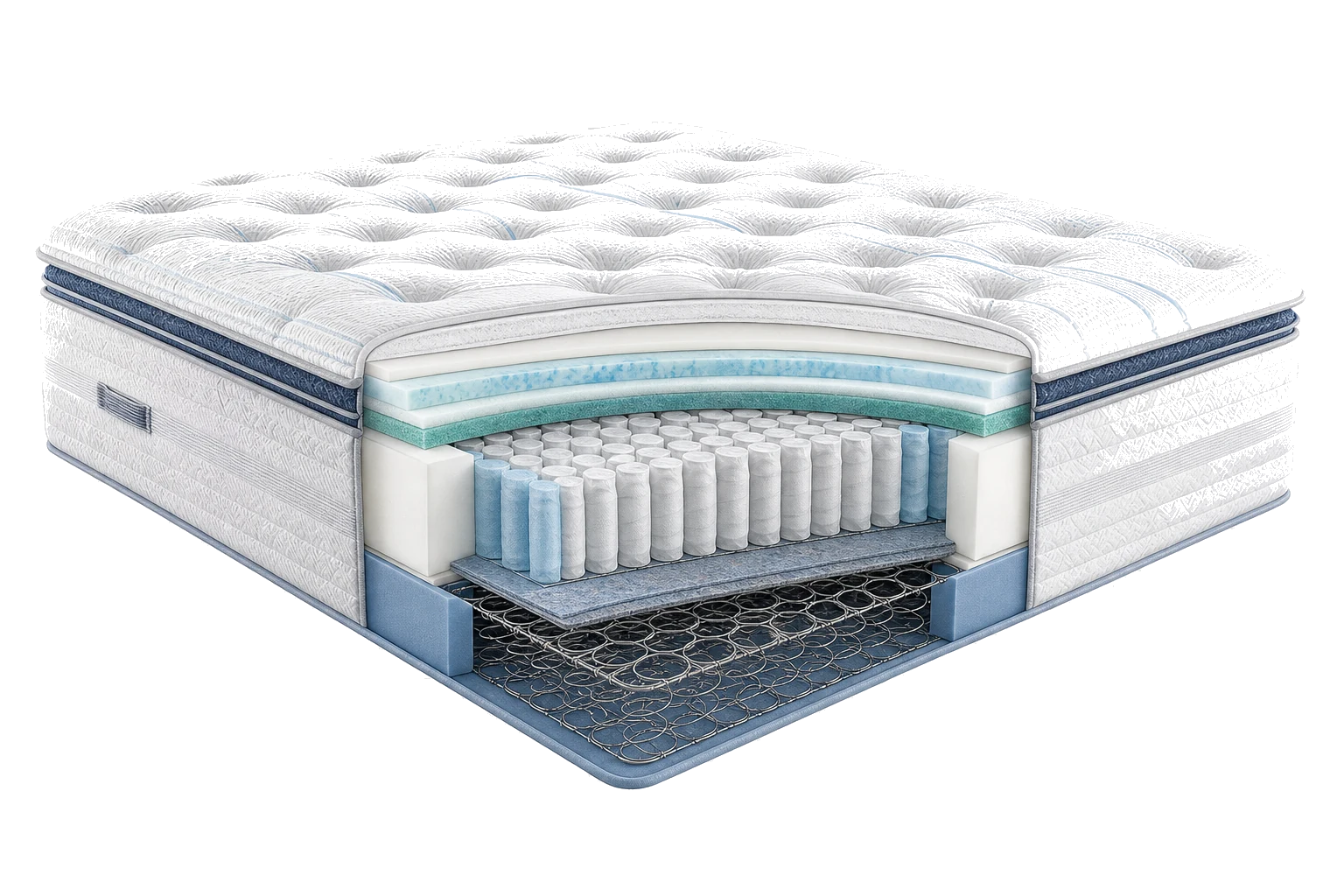
- Firmness
- 6.5 / 10 (Luxury Firm)
- Profile
- 11.5 inches (or 14.5 inches)
- Coil Core
- 884 pocketed comfort coils + 416 13-gauge tempered steel base coils
- Comfort Stack
- 3-inch Euro pillowtop + high-density memory foam active wire lumbar crown
- Trial & Warranty
- 365-night home trial · Lifetime warranty ($99 return fee)
- Dual-coil construction prevents center sag and promotes maximum airflow
- Dedicated center-third active wire delivers superior spinal neutrality
- High-density foam encasement around all 4 perimeters
- Exact IFD numbers for upper euro-pillowtop foam layers are proprietary
- Dual-coil assembly is heavier to move than single-tier hybrids (110 lbs Queen)
Helix Midnight Luxe
Best for: Side sleepers seeking deep shoulder pressure relief with zoned lumbar support
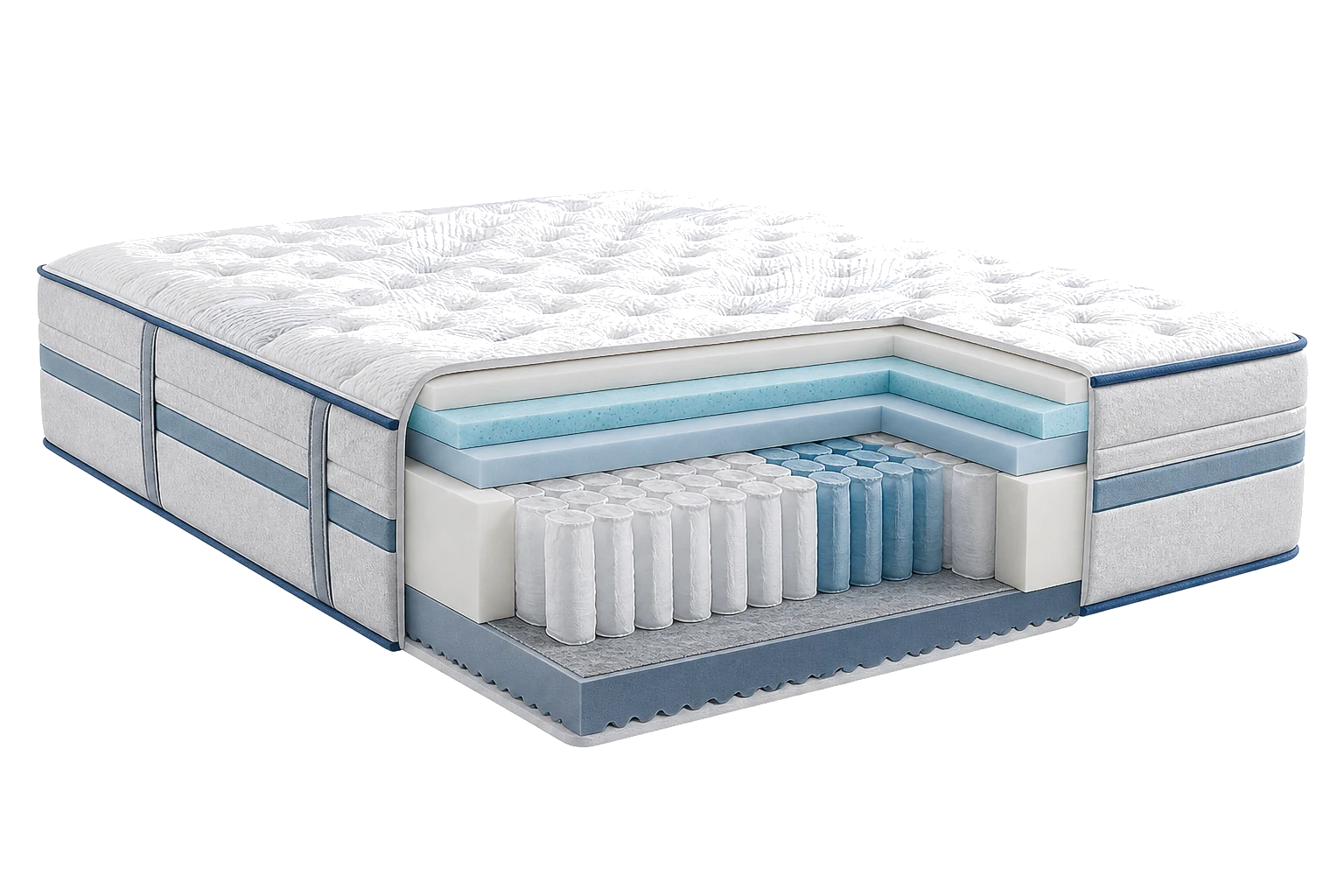
- Firmness
- 5.5 - 6.0 / 10 (Medium)
- Profile
- 13.5 inches
- Coil Core
- Up to 1,000+ individually wrapped zoned coils with reinforced perimeter
- Comfort Stack
- Tencel pillowtop + responsive memory foam + high-density polyfoam transition
- Trial & Warranty
- 100-night trial · 15-year limited warranty (Free returns)
- Zoned pocket coils allow shoulders to sink while keeping lumbar lifted
- GlacioTex cooling cover option lowers surface temperature rapidly
- Proven motion isolation across multiple independent laboratory tests
- Specific pound-densities of the middle transition polyfoam layer are unpublished
- Tencel quilted cover is dry-clean / spot-clean only
WinkBed (Luxury Firm)
Best for: Couples, back sleepers, and those wanting a traditional plush hotel feel
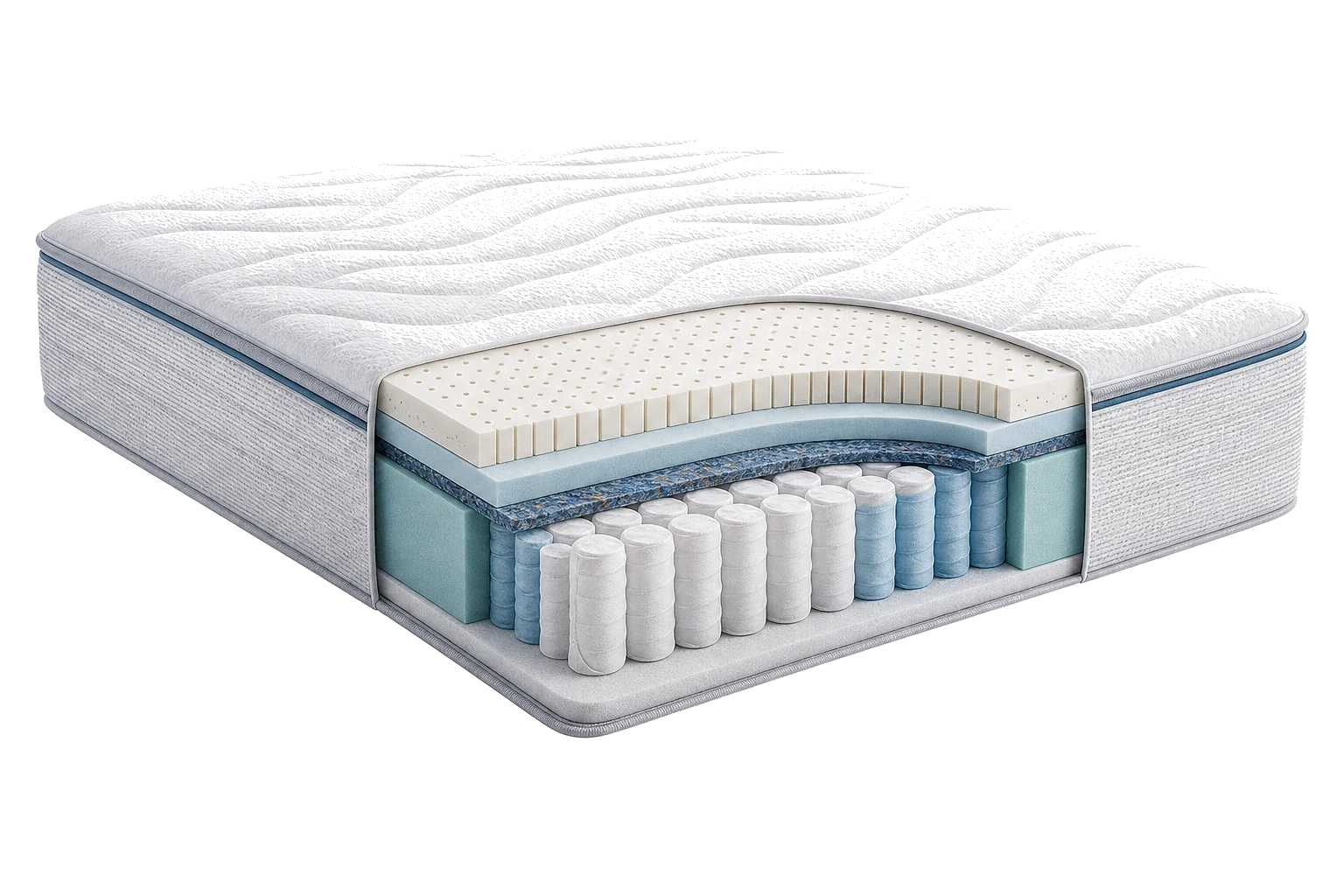
- Firmness
- 6.5 / 10 (Luxury Firm)
- Profile
- 13.5 inches
- Coil Core
- Triple-zoned pocketed coils with Extra-Edge anti-sag perimeter support
- Comfort Stack
- Euro-pillowtop with gel-infused Hypersoft foam + LumbarLayer support pad
- Trial & Warranty
- 120-night trial · Lifetime warranty (Free returns)
- Triple-zoned pocketed coil system prevents hip dip
- Heavy-duty Extra-Edge support allows 100% surface usability
- OEKO-TEX Standard 100 and CertiPUR-US certified foam layers
- Internal foam densities are not stated in publicly available marketing sheets
- Thick 13.5-inch profile requires deep-pocket fitted sheets
Amerisleep AS3 Hybrid
Best for: Hot sleepers and allergy-sensitive individuals preferring responsive foam
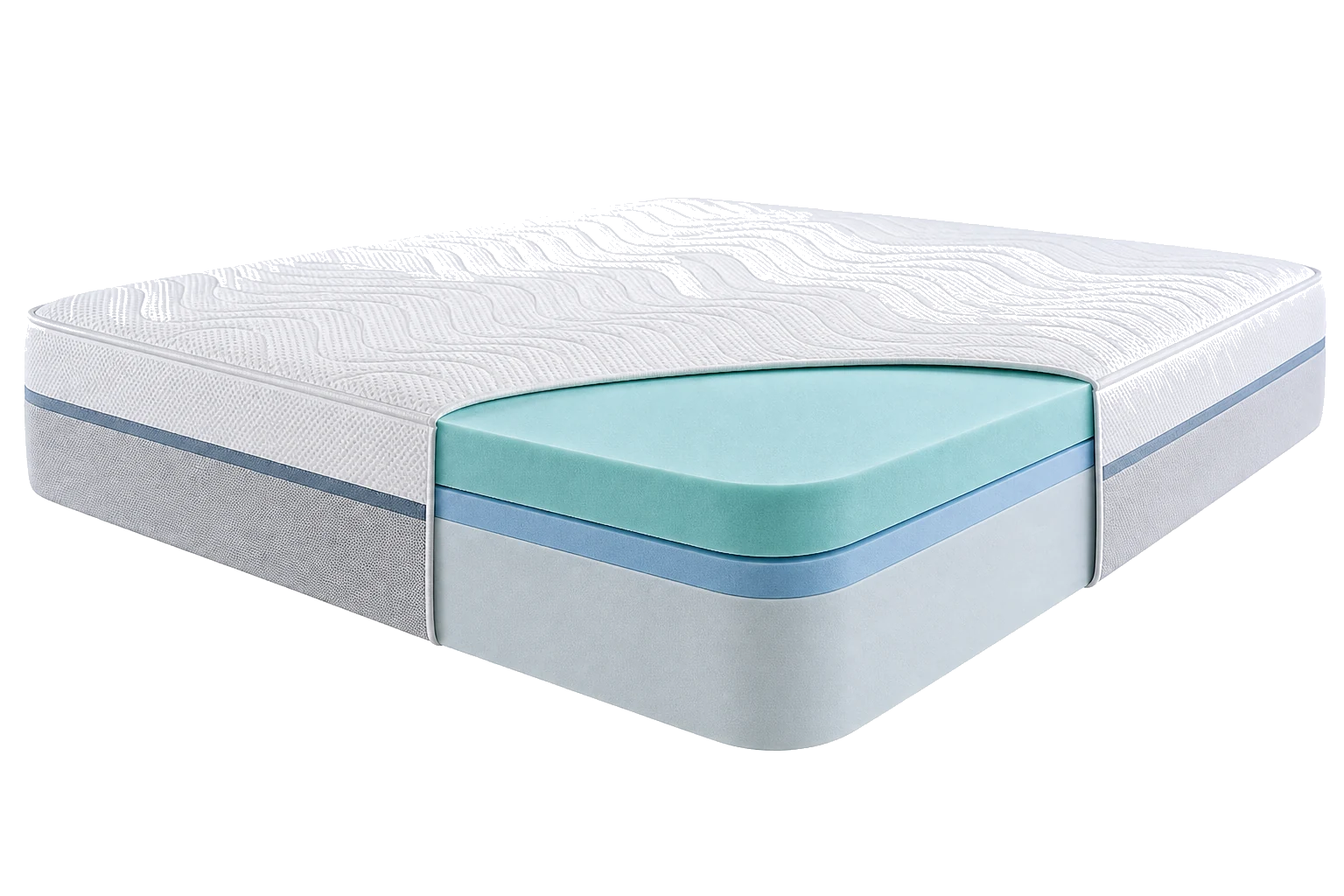
- Firmness
- 6.0 / 10 (Medium)
- Profile
- 12.0 inches
- Coil Core
- Zoned pocketed coils with high-durability perimeter edge rails
- Comfort Stack
- Bio-Pur open-cell plant-based memory foam + Affinity transition layer
- Trial & Warranty
- 100-night trial · 20-year warranty (Free returns)
- Bio-Pur foam dissipates heat 5x faster than petroleum-based memory foam
- Rapid 3-second rebound prevents feeling stuck when turning over
- Low-VOC CertiPUR-US certified with minimal initial off-gassing
- Coil turn counts and exact wire gauge specs are not published on brand product page
- Firmness is slightly softer for sleepers exceeding 230 lbs
5. Edge Support, Motion Transfer & Breathability: What the Lab Tests Show
Key Finding: Independent acoustic, thermal, and deflection sensors reveal clear performance differences between single-coil hybrids, dual-coil units, and all-foam mattresses.
In standardized laboratory drop tests (such as a 15-lb bowling ball dropped from 12 inches), pocketed coil hybrids consistently achieve motion isolation scores within 85-92% of pure memory foam beds. The independent cloth encasement of each coil prevents lateral kinetic transfer across the bed.
Edge support in hybrids significantly outperforms all-foam mattresses. High-performance hybrids incorporate either a high-density foam encasement tub (such as Saatva's Dual-Perimeter edge foam) or higher-gauge perimeter steel coils (such as WinkBeds' Extra-Edge system). Deflection testing shows edge sit-sinkage is reduced by 40% compared to typical boxed foam mattresses, expanding the usable sleep surface.
Thermal dissipation sensors show hybrid mattress internal chambers run 2.8°F to 4.5°F cooler over an 8-hour sleep cycle than dense solid foam cores, because convective air currents freely circulate through the coil layer with every body movement.
| Parameter | Pocketed Coil Hybrid | All-Foam Mattress | Traditional Innerspring |
|---|---|---|---|
| Motion Isolation | High (88-94% vibration dampening) | Very High (95-98% dampening) | Low (55-70% vibration transfer) |
| Edge Pushback & Support | Excellent (0.8-1.4 in sit deflection) | Fair to Poor (2.2-3.5 in deflection) | Very Good (1.0-1.6 in deflection) |
| Thermal Dissipation / Airflow | Superior (Open convective coil chamber) | Moderate to Low (Heat trap risk) | Superior (High airflow, low padding) |
| Ease of Movement (Hysteresis) | Effortless responsive spring rebound | Sluggish memory foam response | High spring bounce with vibration |
6. Durability, Sag Resistance & Warranty Fine Print to Watch For
Key Finding: A well-built hybrid should last 8 to 12 years. However, warranty coverage is frequently voided by minor technicalities in foundation spacing or spot staining.
The primary point of failure in hybrid mattresses is not the steel coils-tempered steel springs can endure millions of compression cycles without loss of tensile strength. Instead, failure occurs when thin, low-density comfort foams break down, resulting in body impressions over 1.5 inches deep.
When reviewing warranty fine print, pay close attention to the indentation threshold required to file a claim. Premium manufacturers specify a 0.75-inch or 1.0-inch sag threshold, while less generous warranties require a 1.5-inch non-weight-bearing depression before replacement is authorized. Additionally, ensure your bed base complies with the manufacturer's slat spacing rules (usually no wider than 3 to 4 inches apart) to preserve full warranty validity.
Frequently Asked Questions
Specific evidence-backed answers to the most common questions regarding mattress specifications, performance metrics, and buying strategies. All questions displayed below for quick reading.
Q1. How long does a quality hybrid mattress realistically last?
A quality hybrid mattress with 13.5-15 gauge tempered steel coils and high-density comfort foams (3.5+ lb/cu ft memory foam or natural latex) lasts between 8 and 12 years with proper foundation support and periodic rotation.
Q2. Is a hybrid mattress good for lower back pain?
Yes, particularly medium-firm hybrids featuring zoned pocketed coils or active lumbar wires. Orthopedic sleep studies consistently show that medium-firm support (6.0-7.0 on the 10-point scale) provides the optimal balance of lumbar lordosis support and hip pressure relief.
Q3. Do hybrid mattresses sleep hot compared to memory foam beds?
No. Hybrids sleep significantly cooler than all-foam beds because the open coil support chamber allows continuous convective airflow, preventing trapped body heat from building up beneath the comfort layers.
Q4. Can you flip a hybrid mattress?
Most modern hybrids are one-sided with a dedicated top-to-bottom architecture (comfort layers on top, coils in the middle, stabilizing base foam on the bottom). Instead of flipping, rotate the mattress 180 degrees head-to-foot every 3 to 6 months to ensure even wear.
Q5. What is the difference between a hybrid and an innerspring mattress?
Traditional innersprings use interconnected continuous or Bonnell wire coils with thin padding layers. Hybrids use individually encased pocketed coils that move independently, paired with thick, high-performance comfort stacks (such as latex or memory foam) for superior motion isolation and pressure relief.
Q6. What foundation or bed frame is required for a hybrid mattress?
Hybrids require a rigid, unyielding surface: a solid platform bed, an adjustable base, or a slatted frame where the slats are no more than 3 to 4 inches apart. Flexible old-fashioned box springs can cause pocket coils to bow unevenly.
Ready to Explore Exact Specifications & Teardowns?
Search over 200+ documented mattress models in our research library, compare published specs side-by-side, or use our evidence-based matcher.