Bottom Line:You don't always have to throw away clothes with mattress fiberglass, but heavy contamination is hard to wash out. If glass fibers are woven deep into fleece, wool, or baby clothes, tossing them is the safest choice. Smooth cotton or synthetic items with light dust can often be rinsed outside and washed alone.
Light Dust
Rinse outside and wash alone
Heavy Buildup
Bag and throw away safely
Machine Risk
Never mix with clean laundry
Safety First
Wear gloves and a mask
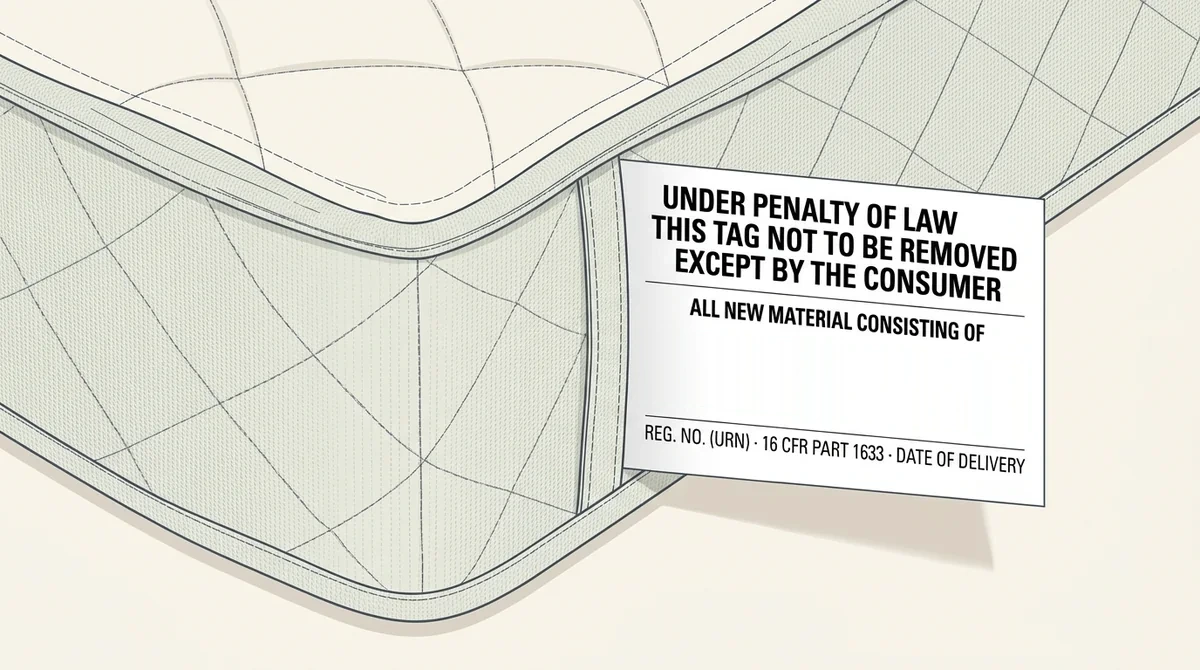
Illustrative Law-Tag Reference (Mattress Safety): Federal rules require a sewn-in tag showing the build date, factory URN, and 16 CFR Part 1633 compliance. A law tag doesn't always name the fire barrier, so confirm with the maker in writing too.
Do you have to throw away clothes with mattress fiberglass?
You only need to throw away clothes that hold heavy fiberglass or have loose, fuzzy weaves. Smooth fabrics with a light dusting can often be saved if you rinse them outside first.
Tiny glass shards act like microscopic needles that hook onto soft yarn. Once they tangle into fleece, knitwear, or towels, your washing machine won't flush them all out. Keeping those items puts your skin and your family's skin at risk every time you wear them.
Which clothes can you wash and which should you toss?
You can decide what to keep by checking the fabric texture and how much glitter-like dust you see. Use this quick table to sort your laundry before you touch a washer.
Fabric Type
Light Dusting
Heavy Contamination
Smooth cotton or denim
Rinse outside, then wash alone
Bag and throw away
Polyester athletic gear
Rinse outside, then wash alone
Bag and throw away
Fleece, wool, or knits
Bag and throw away
Bag and throw away
Baby clothes and towels
Bag and throw away
Bag and throw away
How should you handle and wash contaminated clothes?
You should always handle fiberglass laundry outside or in a garage so you don't spread dust inside. Put on rubber gloves, eye protection, and a dust mask before you touch the pile.
Shake and hose off smooth items outdoors away from open windows.
Wash one small load at a time on a gentle cycle with cold water.
Run two empty hot rinse cycles afterward to clear your washer drum.
Never put fiberglass-exposed clothes in a dryer, because heat won't melt glass and the fan will blow fibers into your vents.
Seal tossed items in heavy plastic bags and tape them shut before putting them in outdoor trash.
What should you do after sorting your wardrobe?
You should check your mattress cover right away so no more fibers leak onto your clean clothes. Never unzip a mattress cover unless the care label clearly says it's washable.
If a leaking mattress caused the mess, you can report the cover failure at SaferProducts.gov and check CPSC.gov for any active recalls. You can also browse our fiberglass-free mattress guide to find safer replacements that meet 16 CFR Part 1632 and 16 CFR Part 1633 rules without glass fibers.
Mattress fiberglass terms explained in plain English
Seeing terms like “fire sock,” “silica,” “URN,” or “CertiPUR-US” on a bed tag? Here's what each safety term actually means in plain words.
Inner fire sock (FR sock)
It's a thin, stretchy mesh sleeve wrapped tightly around the foam core under the outer cover. It slows open flames, and it can shed glass shards if you unzip or tear the cover.
Assembly zipper vs. washable cover
A zipper on the bottom usually exists for factory assembly, not washing. Don't unzip it unless the care tag clearly says the outer cover is washable.
Glass fiber and core-spun glass
These are common tag names for fiberglass. Treat glass fiber, fiberglass, glass wool, core-spun glass, and glass yarn as the same woven glass material.
Silica-treated rayon vs. fiberglass
Silica-infused rayon chars safely like ash and doesn't shed sharp glass needles. Seeing silica-treated rayon alone isn't the same as woven fiberglass.
CertiPUR-US doesn't mean fiberglass-free
CertiPUR-US only tests the inner foam for VOCs and chemicals, never the fire sock. Finished-product GOTS or GOLS organic standards prohibit fiberglass socks.
6-sided encasement vs. fitted protector
A fitted protector leaves the bottom seam open. Use a 6-sided zippered waterproof encasement if you need to seal a suspect bed completely.
URN and manufacture date
The Uniform Registry Number (like CA-XXXXX) and build date identify the factory and year. You'll need that date to check older pre-transition stock.
16 CFR Part 1632 vs. 1633
Every U.S. bed must pass both federal fire tests. Part 1632 tests smoldering cigarettes, while Part 1633 tests a 30-minute open flame.
Fiberglass-free mattress options to compare
If you're replacing a leaking bed, you don't have to guess which brands use glass fibers. These verified options use wool, rayon, or plant-based barriers instead.
Advertising disclosure: We may earn a commission if you buy through links or product photos below. It doesn't change what we write. How we make money →
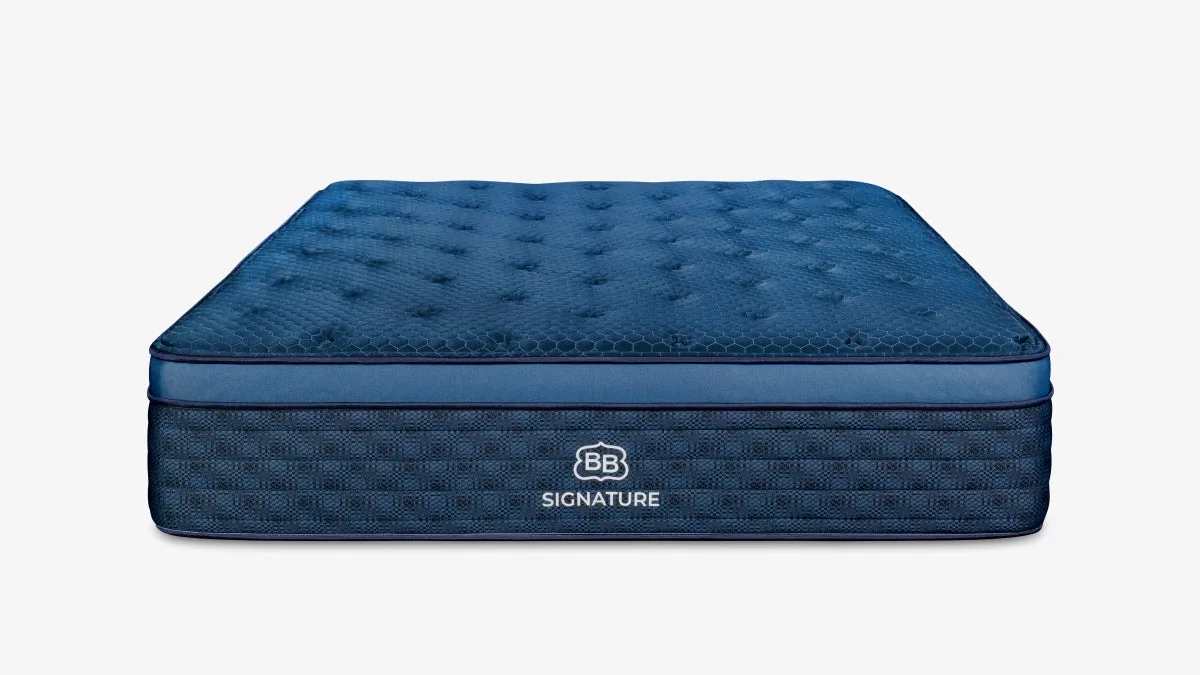
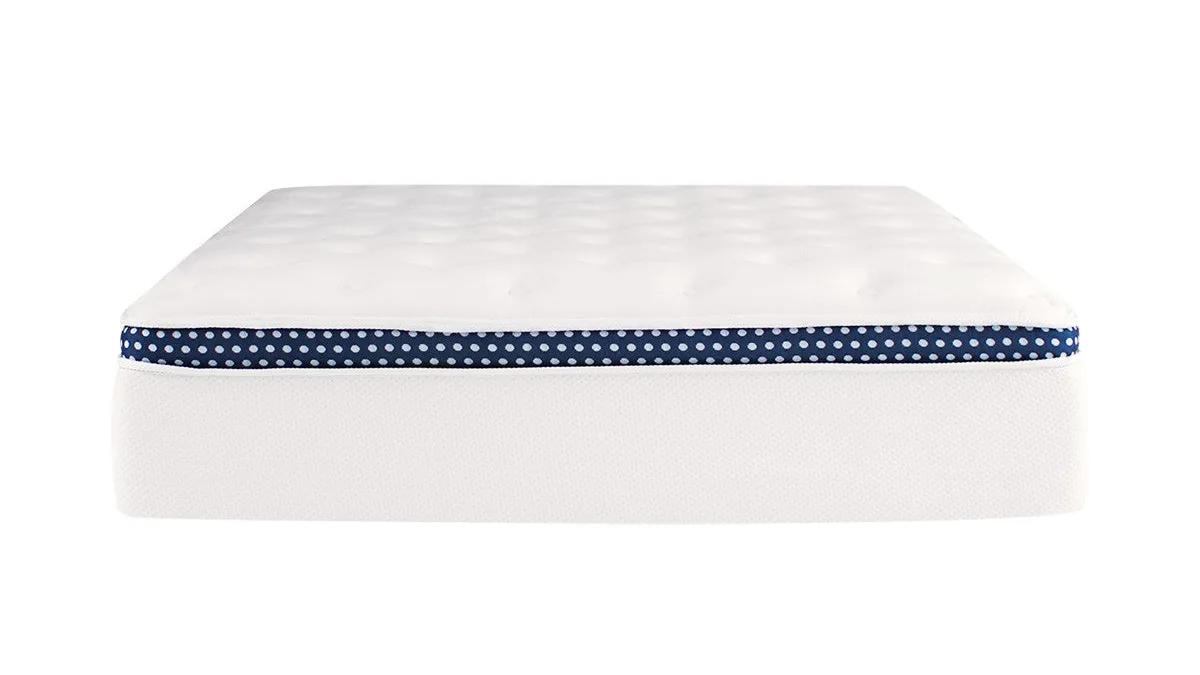
Brooklyn Bedding Signature
Budget Pick · Hybrid · Fiberglass-Free Barrier
$999 Queen · 120-Night Trial · Lifetime Warranty
Why it's fiberglass-free: Brooklyn Bedding states its beds use a fiberglass-free flame barrier in a U.S.-made hybrid.
Best for: Shoppers replacing a boxed foam bed who want a fiberglass-free hybrid around $1,000.
QCan a washing machine remove all mattress fiberglass from clothes?
A washer can't remove every glass fiber from thick, fuzzy, or knitted fabrics. It works best on smooth cotton or synthetic shirts that only picked up light surface dust.
QWill fiberglass ruin my washing machine if I wash exposed clothes?
It won't break your washer, but leftover fibers can cling to the drum and transfer to your next load. Always run two empty hot rinse cycles and wipe the rubber gasket with a damp paper towel.
QCan I put clothes with fiberglass in the dryer?
No, you shouldn't put fiberglass-exposed clothes in a dryer. The air flow spreads tiny glass shards through your lint trap, vent hose, and future laundry.
QHow do I know if fiberglass is still on my clothes after washing?
Shine a bright flashlight across the dry fabric in a dark room to look for tiny, sparkling specks. If you still see glints or feel itching when you touch it, throw the item away.
QShould I throw away baby clothes touched by mattress fiberglass?
Yes, it's always safest to throw away baby clothes and crib sheets touched by fiberglass. Infants have delicate skin, and it isn't worth risking missed glass shards.
Sources, primary references & how we check
How we check facts: We checked 5 primary government and standards sources on Nov 27, 2026. We don't cut beds open or run a lab. We report what makers publish and what public federal safety files say.
Nappedia Research Team
Primary-Source Fact Checking
Our research team reads federal CPSC rules, state bills, and official safety pages directly at the source.
U.S. CPSC Mattress Flammability Guidance (cpsc.gov). Official federal guidance explaining how U.S. mattresses must pass both 16 CFR Part 1632 smoldering and 16 CFR Part 1633 open-flame tests. Checked Nov 27, 2026. View source →
16 CFR Part 1632 (eCFR) Standard for the Flammability of Mattresses and Mattress Pads (ecfr.gov). Federal smoldering cigarette ignition standard covering U.S. mattresses and mattress pads. Checked Nov 27, 2026. View source →
16 CFR Part 1633 (eCFR) Standard for the Flammability of Mattress Sets (ecfr.gov). Federal open-flame standard requiring U.S. mattress sets to limit peak heat release during a 30-minute burn test. Checked Nov 27, 2026. View source →
U.S. CPSC SaferProducts.gov Incident Reporting Portal (saferproducts.gov). Public federal portal where consumers can report mattress fiberglass leaks, injuries, or cover failures. Checked Nov 27, 2026. View source →
U.S. CPSC Product Recalls Database (cpsc.gov). Official federal recall database for checking mattress, crib mattress, and bedding safety recalls. Checked Nov 27, 2026. View source →
Master Fiberglass Pillar Hub
Check 411 brands, decode your law tag, or run triage
Use our free interactive Law-Tag Decoder, 411-Brand Lookup, 60-Second Triage Wizard, and 50-State Law Tracker.