Bottom Line:No, GREENGUARD Gold certification doesn't mean a crib mattress is fiberglass-free. It tests for low chemical emissions, not the materials inside the fire barrier. You'll still need to check the brand's fire-barrier disclosure before you buy.
Does It Ban Fiberglass
No, it only tests chemical emissions
Flammability Rules
Must pass 16 CFR 1632 and 1633
Law Tag Check
Many omit the inner fire sock
Safest Step
Get written confirmation from the brand
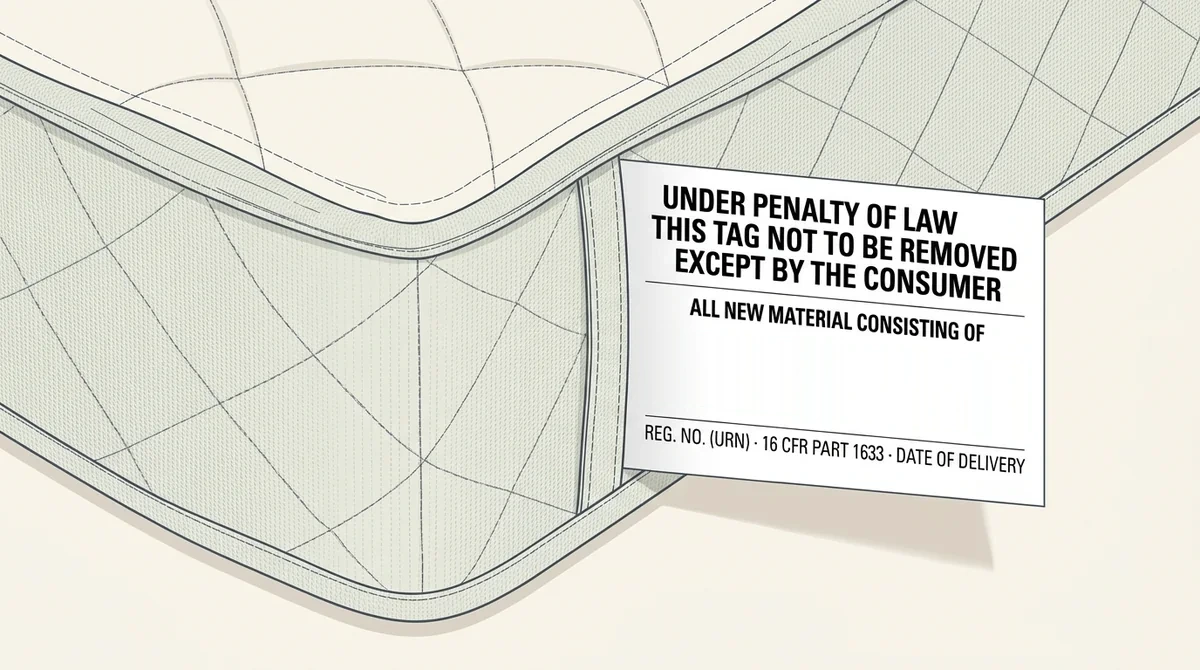
Illustrative Law-Tag Reference (Mattress Safety): Federal rules require a sewn-in tag showing the build date, factory URN, and 16 CFR Part 1633 compliance. A law tag doesn't always name the fire barrier, so confirm with the maker in writing too.
Does GREENGUARD Gold mean a crib mattress is fiberglass-free?
No, GREENGUARD Gold doesn't guarantee a crib mattress is fiberglass-free. The label measures volatile organic compounds (VOCs) released into your baby's room. It doesn't test or ban glass fibers inside the mattress.
A crib mattress can earn GREENGUARD Gold and still use a fiberglass fire sock. Solid glass fibers don't off-gas like liquid chemicals, so they won't trigger an emissions test. You can't rely on this badge alone to keep fiberglass out of your nursery.
What does GREENGUARD Gold test compared to fire-safety rules?
GREENGUARD Gold checks indoor air quality, while U.S. safety standards check fire resistance. Every crib mattress sold in the U.S. must pass 16 CFR Part 1632 and 16 CFR Part 1633. Here's how these standards compare.
Standard or Label
What It Checks
Bans Fiberglass
GREENGUARD Gold
Low chemical and VOC emissions
No
16 CFR Part 1632
Smoldering cigarette ignition
No
16 CFR Part 1633
Open-flame heat release
No
How can you check if a GREENGUARD Gold crib mattress has fiberglass?
You can check the fire-barrier material directly with the brand before you buy. Many law tags omit the inner fire sock, so always confirm with the brand in writing. Follow these steps to protect your nursery.
Read the product page for clear words like "fiberglass-free" or "no glass fiber."
Email customer support and ask what exact material passes 16 CFR 1633.
Look for safer alternatives like wool, rayon, or polyester fire barriers.
Check the U.S. CPSC recall database if you're unsure about a brand's history.
What should you do if a brand won't share its fire barrier?
Skip the mattress if a brand won't tell you what's inside its fire barrier. A lack of openness about a basic safety fact is a potential warning sign worth weighing before you buy. You deserve a clear answer for your baby's bed.
If you already own a mattress and suspect a leak, don't unzip the outer cover. You can report cover failures on SaferProducts.gov and browse our fiberglass safety hub for verified brands.
Mattress fiberglass terms explained in plain English
Seeing terms like “fire sock,” “silica,” “URN,” or “CertiPUR-US” on a bed tag? Here's what each safety term actually means in plain words.
Inner fire sock (FR sock)
It's a thin, stretchy mesh sleeve wrapped tightly around the foam core under the outer cover. It slows open flames, and it can shed glass shards if you unzip or tear the cover.
Assembly zipper vs. washable cover
A zipper on the bottom usually exists for factory assembly, not washing. Don't unzip it unless the care tag clearly says the outer cover is washable.
Glass fiber and core-spun glass
These are common tag names for fiberglass. Treat glass fiber, fiberglass, glass wool, core-spun glass, and glass yarn as the same woven glass material.
Silica-treated rayon vs. fiberglass
Silica-infused rayon chars safely like ash and doesn't shed sharp glass needles. Seeing silica-treated rayon alone isn't the same as woven fiberglass.
CertiPUR-US doesn't mean fiberglass-free
CertiPUR-US only tests the inner foam for VOCs and chemicals, never the fire sock. Finished-product GOTS or GOLS organic standards prohibit fiberglass socks.
6-sided encasement vs. fitted protector
A fitted protector leaves the bottom seam open. Use a 6-sided zippered waterproof encasement if you need to seal a suspect bed completely.
URN and manufacture date
The Uniform Registry Number (like CA-XXXXX) and build date identify the factory and year. You'll need that date to check older pre-transition stock.
16 CFR Part 1632 vs. 1633
Every U.S. bed must pass both federal fire tests. Part 1632 tests smoldering cigarettes, while Part 1633 tests a 30-minute open flame.
Fiberglass-free mattress options to compare
You don't have to guess when shopping for your baby's crib. These verified fiberglass-free options use clear, disclosed fire barriers.
Advertising disclosure: We may earn a commission if you buy through links or product photos below. It doesn't change what we write. How we make money →
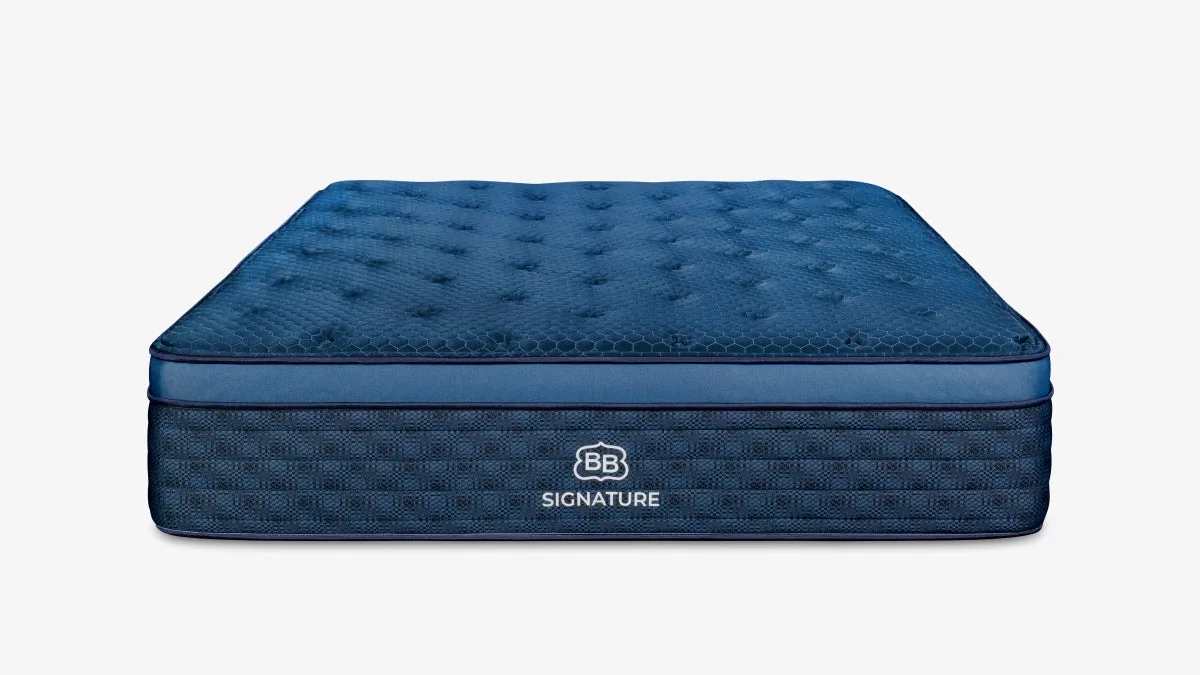
Brooklyn Bedding Signature
Budget Pick · Hybrid · Fiberglass-Free Barrier
$999 Queen · 120-Night Trial · Lifetime Warranty
Why it's fiberglass-free: Brooklyn Bedding states its beds use a fiberglass-free flame barrier in a U.S.-made hybrid.
Best for: Shoppers replacing a boxed foam bed who want a fiberglass-free hybrid around $1,000.
QDoes GREENGUARD Gold mean a crib mattress is non-toxic?
It means the mattress meets strict limits for chemical emissions and VOCs. It doesn't mean every physical fiber inside the bed is free of fiberglass.
QWhy do crib mattresses need a fire barrier?
Crib mattresses sold in the U.S. must pass 16 CFR Part 1632 and 1633. Brands use fire barriers like wool, rayon, or fiberglass to meet those rules.
QCan fiberglass leak out of a GREENGUARD Gold crib mattress?
Yes, it can leak if the mattress uses a fiberglass sock and the cover tears. You shouldn't remove or wash the outer cover unless the label says it's safe.
QWill the crib mattress law tag always list fiberglass?
No, it won't always list it. Many law tags omit the inner fire sock, so always confirm with the brand in writing.
QWhat is the safest fire barrier for a crib mattress?
Natural wool and food-grade polymers are popular fiberglass-free choices. Always ask the brand to confirm its exact fire-barrier material in writing.
Sources, primary references & how we check
How we check facts: We checked 5 primary government and standards sources on Nov 27, 2026. We don't cut beds open or run a lab. We report what makers publish and what public federal safety files say.
Nappedia Research Team
Primary-Source Fact Checking
Our research team reads federal CPSC rules, state bills, and official safety pages directly at the source.
U.S. CPSC Mattress Flammability Guidance (cpsc.gov). Official federal guidance explaining how U.S. mattresses must pass both 16 CFR Part 1632 smoldering and 16 CFR Part 1633 open-flame tests. Checked Nov 27, 2026. View source →
16 CFR Part 1632 (eCFR) Standard for the Flammability of Mattresses and Mattress Pads (ecfr.gov). Federal smoldering cigarette ignition standard covering U.S. mattresses and mattress pads. Checked Nov 27, 2026. View source →
16 CFR Part 1633 (eCFR) Standard for the Flammability of Mattress Sets (ecfr.gov). Federal open-flame standard requiring U.S. mattress sets to limit peak heat release during a 30-minute burn test. Checked Nov 27, 2026. View source →
U.S. CPSC SaferProducts.gov Incident Reporting Portal (saferproducts.gov). Public federal portal where consumers can report mattress fiberglass leaks, injuries, or cover failures. Checked Nov 27, 2026. View source →
U.S. CPSC Product Recalls Database (cpsc.gov). Official federal recall database for checking mattress, crib mattress, and bedding safety recalls. Checked Nov 27, 2026. View source →
Master Fiberglass Pillar Hub
Check 411 brands, decode your law tag, or run triage
Use our free interactive Law-Tag Decoder, 411-Brand Lookup, 60-Second Triage Wizard, and 50-State Law Tracker.