Bottom Line:Amazon Basics doesn't publish a fiberglass-free statement online. You can't assume every Amazon Basics bed is free of glass fiber. We checked official Amazon Basics pages on Nov 25, 2026. We found no fiberglass FAQ or fire barrier details. That lack of openness is a potential warning sign worth weighing before you buy. Check the sewn-in law tag and ask Amazon Basics in writing to confirm what's inside.
Which Amazon Basics models or years have fiberglass?
Amazon Basics doesn't publish a fiberglass-free statement or fire barrier list for its beds. Any model or production run could use glass fiber or an undisclosed barrier. The Amazon Basics brand review notes that the Core Mattress uses memory foam. Still, the maker hasn't shared its flame barrier online.
Model or Line
Build Type
Fire Barrier Disclosure
What You Should Do
Amazon Basics Core Mattress
Memory foam
Not published by maker
Check the sewn-in law tag before use
Older or boxed Amazon Basics lines
Foam or hybrid
Not published by maker
Ask Amazon Basics in writing before buying
Because official Amazon Basics pages don't list the fire barrier, don't guess from the outer cover. Always check your exact bed before you bring it into your bedroom.
Manufacturer Disclosure Check (Amazon Basics · Checked Nov 25, 2026)
We checked amazon.co.uk on Nov 25, 2026 and didn't find a standalone fiberglass statement online. That's a potential warning sign: a lack of openness about a basic safety fact is worth weighing strongly before you buy.
Model-exception note: Always check your specific bed's sewn-in tag and confirm with support. Older or retailer-exclusive runs can use a different fire barrier than current flagship models.
What fire barrier does Amazon Basics use to meet federal rules?
Amazon Basics doesn't publish its fire barrier material online. We can't confirm if it uses wool, rayon, polyester, or glass fiber. Every bed sold in the US must pass 16 CFR Part 1633 open-flame tests and 16 CFR Part 1632 smoldering tests.
Brands meet those rules in different ways. Some use silica-treated rayon or wool socks. Budget memory foam beds often use woven glass fiber socks. Amazon Basics hasn't shared safety badges or barrier details on its site. You'll need written proof from the brand.
Do Amazon, Costco, or third-party Amazon Basics models differ?
Amazon Basics beds are sold through Amazon. Older or clearance stock can carry different law tags or fire barriers than newer runs. Third-party sellers may also list older boxed stock that doesn't match current builds.
Two listings can share a similar name. Even so, the factory or build date on the tag can differ. Check the exact seller and inspect the sewn-in label when the box arrives.
What exact language appears on an Amazon Basics law tag?
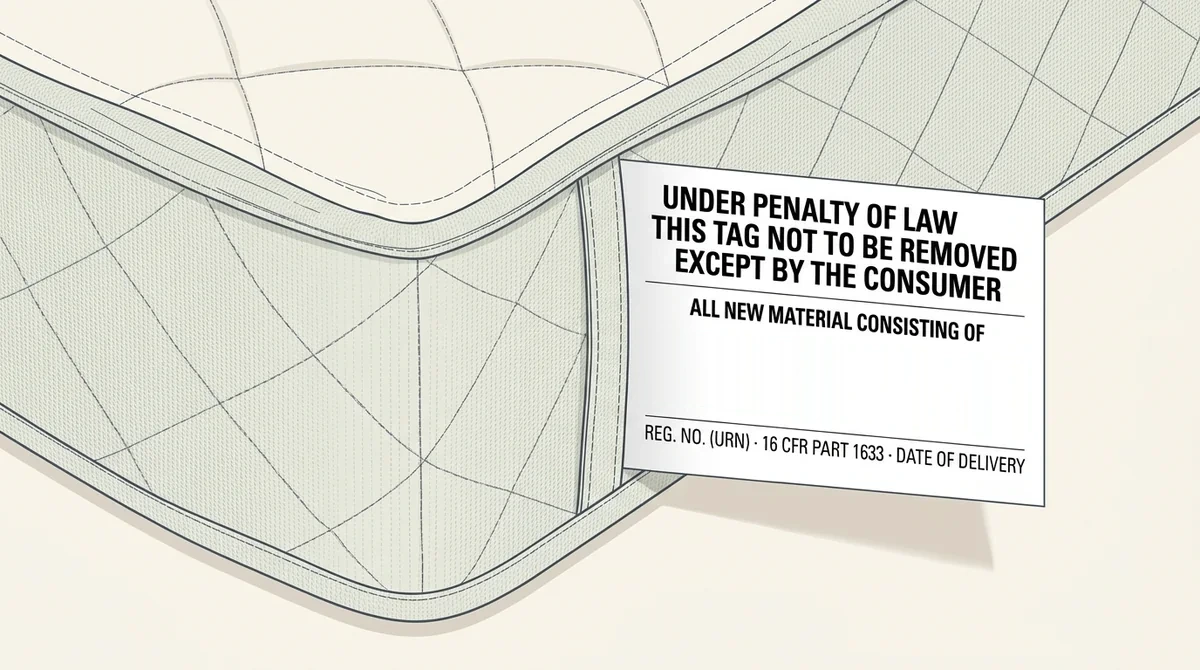
We haven't photographed every Amazon Basics law tag in-house. Inspect your own bed's tag when it arrives. Under 16 CFR Part 1632, tags must show the build month, year, factory location, and compliance label. Some brands list glass fiber on the filling line, while others don't.
Find the white sewn-in law tag along the bottom or side seam of your bed.
Read the filling section for words like glass fiber, fiberglass, or modacrylic.
Note the build date and factory location so you know your exact run.
Ask Amazon Basics support in writing to confirm the fire barrier material.
Illustrative Law-Tag Reference (Amazon Basics: Not a Photo of Your Exact Bed): Always check the sewn-in law tag on your Amazon Basics bed when it arrives. Amazon Basics doesn't publish its fire barrier online, so confirm the materials in writing.
Brand-Specific Law-Tag Decoder: What to Look For on Amazon Basics
Fiberglass-Free Terms on Amazon Basics
100% Cotton / Wool: Natural fibers often used in outer covers or wool-based fire barriers.
Polyurethane Foam / Memory Foam: Standard comfort foam layers like those in the Amazon Basics Core Mattress.
Rayon / Cellulose Fiber: Plant-derived fiber commonly used in non-fiberglass fire-barrier socks.
Watch-Out Terms on Amazon Basics
Glass Fiber / Fiberglass: Indicates woven glass fibers are present inside the fire-barrier layer.
Silica / Core-Spun Glass: Alternate terms that can indicate glass-based flame-barrier threads.
Modacrylic: A synthetic flame-retardant fiber used in some chemical fire barriers.
Should you unzip or wash the Amazon Basics mattress cover?
Never unzip an outer Amazon Basics cover unless the care tag says it's washable. Unzipping an inner fire-barrier sock can release loose glass fibers into your air and bedding.
Use a waterproof mattress protector over the top to guard against spills. Don't remove the factory cover. Keep the law tag intact while you care for the bed.
Safe to do
Put a waterproof zippered protector over your Amazon Basics mattress.
Spot-clean surface spills gently with mild soap and a damp cloth.
Keep the sewn-in law tag intact to verify your build date.
Never do
Never unzip the outer cover unless the care tag says it's washable.
Never machine-wash or dry-clean a non-removable mattress cover.
Never use a standard vacuum on suspected loose glass fibers.
Step 1: Blot spills gently with mild soap and cold water
Dab stains lightly with a damp microfiber cloth and mild soap. Don't soak the cover or scrub down into the inner fire barrier.
Step 2: Air-dry the mattress flat without unzipping the cover
Keep the cover zipped and point a fan across the damp spot until it's dry. Washing a non-removable cover can shrink it and expose the inner sock.
Step 3: Add a breathable waterproof mattress protector
Put a washable waterproof protector over the cover on day one. It'll block sweat and spills before they ever reach the bed.
Has Amazon Basics had any CPSC recalls or fiberglass complaints?
A CPSC check flagged a recall record for Amazon Basics. Public federal dockets and FTC notices show 0 listed federal class actions or FTC orders as of November 2026. You can check the Mattress Fiberglass Safety Hub for more safety tips and recall context.
If you own an Amazon Basics bed, keep your law tag intact. You can check your build date against any CPSC notice. You can also read our Amazon Basics brand review for more details.
0 CPSC fiberglass recalls found.
What should you do if you suspect fiberglass in an Amazon Basics bed?
If you suspect fiberglass in your Amazon Basics bed, stop touching the cover right away. Keep kids and pets out of the room. Shine a flashlight across your sheets and floor in a dark room. Look for tiny, shiny shards.
Don't use a standard vacuum, because it can blow fine glass fibers into the air. Seal the bed inside a zippered waterproof cover. Wash exposed bedding separately, and contact Amazon Basics support for next steps. This page is for general information. It is not legal, medical or insurance advice.
Skin, Eye & Breathing Safety (When to See a Doctor)
Rinse exposed skin with cold water only, not hot water or scrubbing. Hot water opens your pores and traps fibers deeper. See a doctor if you get a lingering cough, wheezing, eye pain, or a rash that won't clear after rinsing.
Step 1: Shut off fans and HVAC, close the door, and take photos
Turn off ceiling fans and central air right away so fibers don't spread into ducts. Take clear photos of the law tag and shiny dust before you touch the bed.
Step 2: Put on gloves, an N95 mask, and eye protection
Wear long sleeves, nitrile gloves, a fitted N95 mask, and glasses before touching anything. That keeps fine glass fibers off your skin, eyes, and airways.
Step 3: Seal and double-bag the mattress before moving it
Don't drag an uncovered bed through hallways. Zip it inside a heavy waterproof vinyl encasement, tape the zipper shut, and double-bag it before disposal.
Step 4: Vacuum slowly with a sealed True HEPA vacuum only
Don't use a regular household vacuum, because it'll blow glass fibers right back out the exhaust. Use a sealed True HEPA vacuum on carpets, baseboards, and frames.
Step 5: Wet-wipe hard surfaces and replace HVAC air filters
Dry dusting pushes fibers back into the air. Wipe floors and nightstands with damp disposable cloths, then swap in fresh high-MERV HVAC filters.
Step 6: Wash lightly exposed clothes alone or toss heavy ones
Bag heavily coated sheets or curtains and throw them out. Rinse lightly exposed clothes outside, wash them alone on cold, and run two empty rinse cycles.
Mattress fiberglass terms explained in plain English
Confused by terms like “fire sock,” “silica,” “URN,” or “CertiPUR-US” while checking your Amazon Basics bed? Here's what each safety term on a tag or product page actually means.
Inner fire sock (FR sock)
It's a thin, stretchy mesh sleeve wrapped tightly around the foam core under the outer cover. It slows open flames, and it can shed glass shards if you unzip or tear the cover.
Assembly zipper vs. washable cover
A zipper on the bottom usually exists for factory assembly, not washing. Don't unzip it unless the care tag clearly says the outer cover is washable.
Glass fiber and core-spun glass
These are common tag names for fiberglass. Treat glass fiber, fiberglass, glass wool, core-spun glass, and glass yarn as the same woven glass material.
Silica-treated rayon vs. fiberglass
Silica-infused rayon chars safely like ash and doesn't shed sharp glass needles. Seeing silica-treated rayon alone isn't the same as woven fiberglass.
CertiPUR-US doesn't mean fiberglass-free
CertiPUR-US only tests the inner foam for VOCs and chemicals, never the fire sock. Only finished-product GOTS or GOLS organic standards ban fiberglass socks.
6-sided encasement vs. fitted protector
A fitted protector leaves the bottom seam open. Use a 6-sided zippered waterproof encasement if you need to seal a suspect bed completely.
URN and manufacture date
The Uniform Registry Number (like CA-XXXXX) and build date identify the factory and year. You'll need that date to check older pre-transition stock.
16 CFR Part 1632 vs. 1633
Every U.S. bed must pass both federal fire tests. Part 1632 tests smoldering cigarettes, while Part 1633 tests a 30-minute open flame.
What are the best verified fiberglass-free alternatives to Amazon Basics?
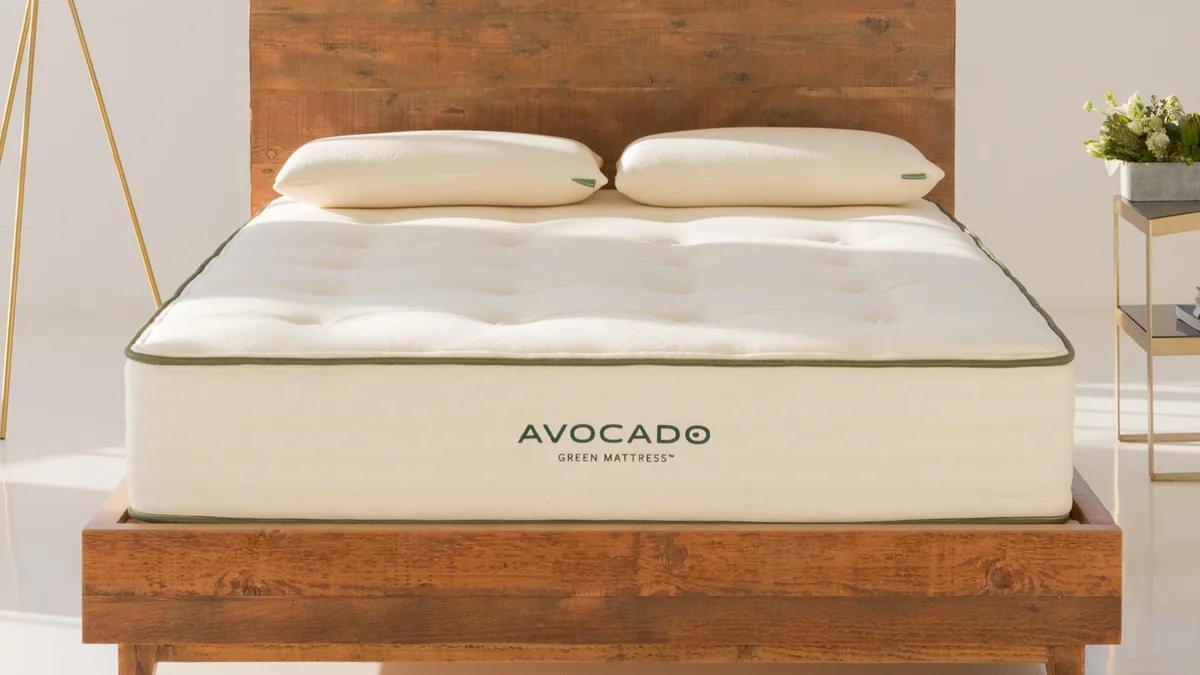
If you don't want to gamble on an undisclosed barrier, pick brands that publish their materials online. Look for beds that use natural wool, thistle, or rayon-only barriers. Make sure they state in writing that they have zero glass fiber.
You'll find verified fiberglass-free options in the comparison cards below.
Advertising disclosure: We may earn a commission if you buy through links or product photos below. It doesn't change what we write. How we make money →
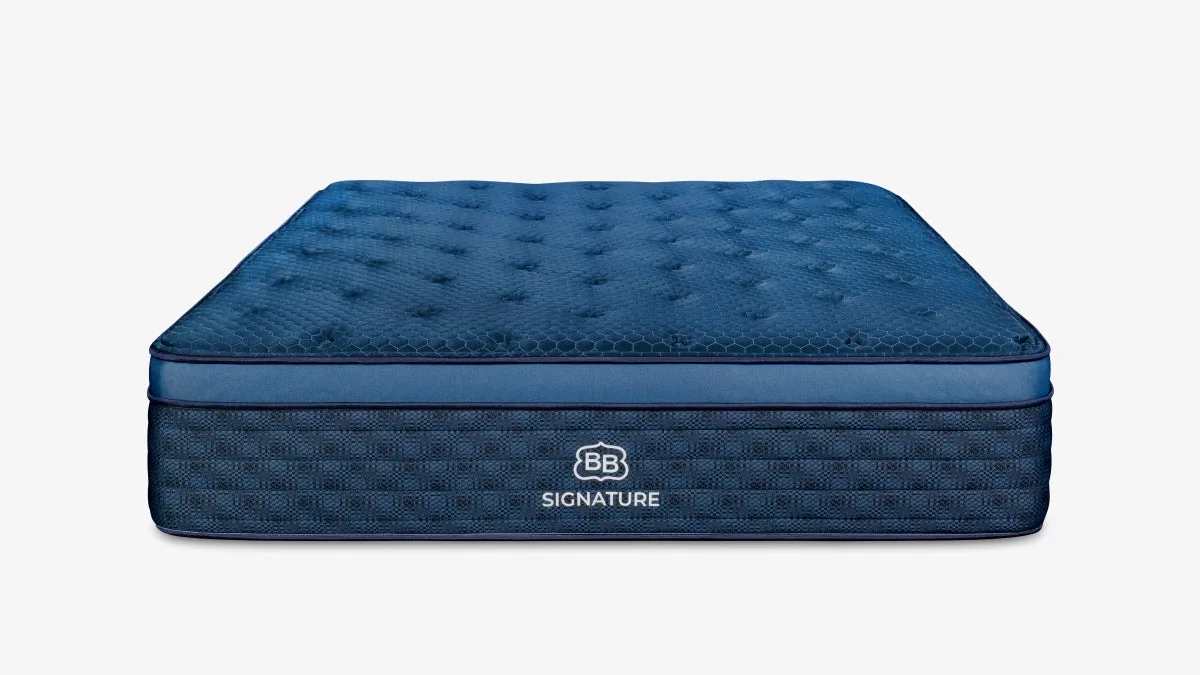
Brooklyn Bedding Signature
Budget Pick · Hybrid · Fiberglass-Free Barrier
$999 Queen · 120-Night Trial · Lifetime Warranty
Why it's fiberglass-free: It uses a fiberglass-free flame barrier in a U.S.-made hybrid at nearly half the cost of organic beds.
Best for: Budget shoppers replacing a boxed foam bed who want a fiberglass-free build under $1,100.
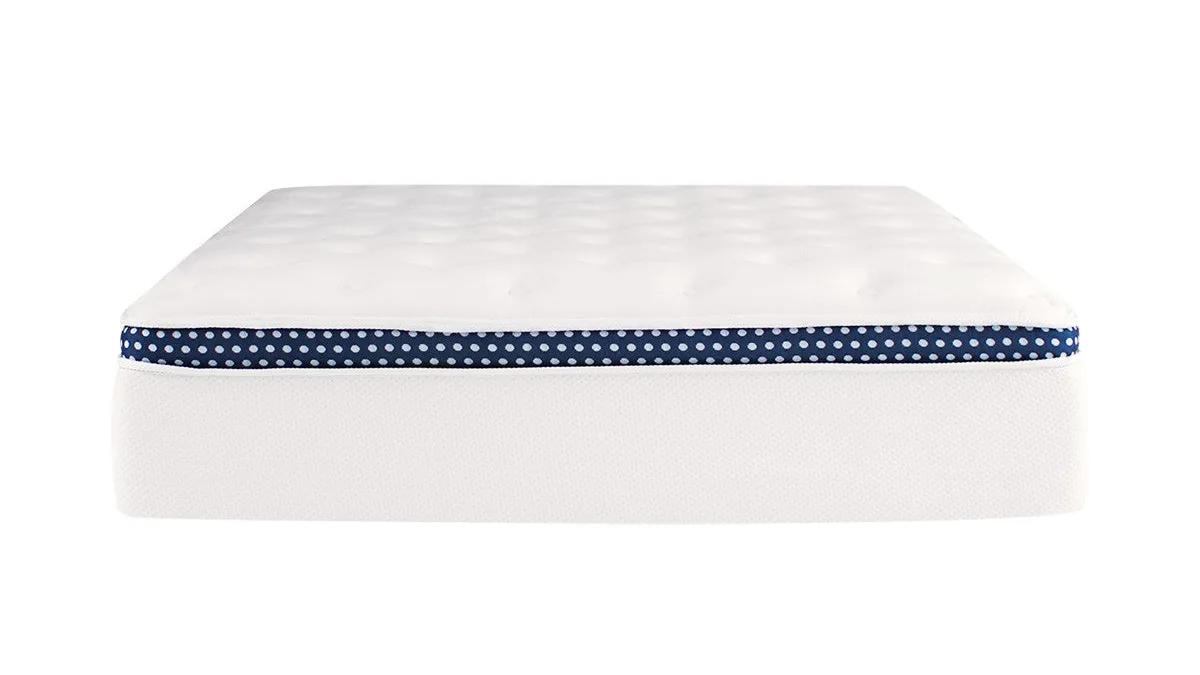
Why it's fiberglass-free: WinkBeds uses a fiberglass-free rayon fire barrier across all four firmness levels. Returns are $0 during the 365-night trial.
Best for: Shoppers who want classic coil support, four firmness choices, and zero fiberglass.
QDoes the Amazon Basics Core Mattress have fiberglass?
Amazon Basics doesn't publish a fiberglass-free statement or fire barrier list for the Core Mattress. It uses memory foam, so check the law tag and ask Amazon Basics in writing.
QWhy doesn't Amazon Basics list its fire barrier online?
We checked official Amazon Basics pages on Nov 25, 2026, and found no fiberglass FAQ or barrier details. That lack of openness is a potential warning sign worth weighing before you buy.
QCan I wash the cover on an Amazon Basics mattress?
Never unzip an outer cover unless the care tag clearly says it's washable. Removing a non-washable cover can disturb the inner fire barrier and void your warranty.
QDoes the Amazon Basics law tag always list fiberglass?
No. Under 16 CFR Part 1632, tags must show the build date, factory location, and compliance label. Some brands list glass fiber on the filling line, while others don't. Always confirm in writing.
QHas Amazon Basics had any mattress recalls?
A CPSC check flagged a recall record for Amazon Basics. Keep your law tag intact so you can check your build date against any CPSC notice.
QAre there any fiberglass lawsuits against Amazon Basics?
As of November 2026, public federal dockets and FTC notices show 0 listed federal class actions or FTC orders. You can still check the law tag before using the bed.
Sources, primary references & how we check
How we check facts: We checked 3 primary sources and federal CPSC recall listings on Nov 25, 2026. We don't cut beds open or run a lab. We report what makers publish and what public federal safety files say.
Nappedia Research Team
Primary-Source Fact Checking
Our research team reads official fire-barrier pages, law-tag notes, and U.S. CPSC 16 CFR Part 1633 rules directly at the source.
Official Amazon Basics Website Check (amazon.co.uk). Checked official Amazon Basics pages (amazon.co.uk) on Nov 25, 2026; no standalone verbatim fiberglass FAQ statement. Checked Nov 25, 2026. View source →
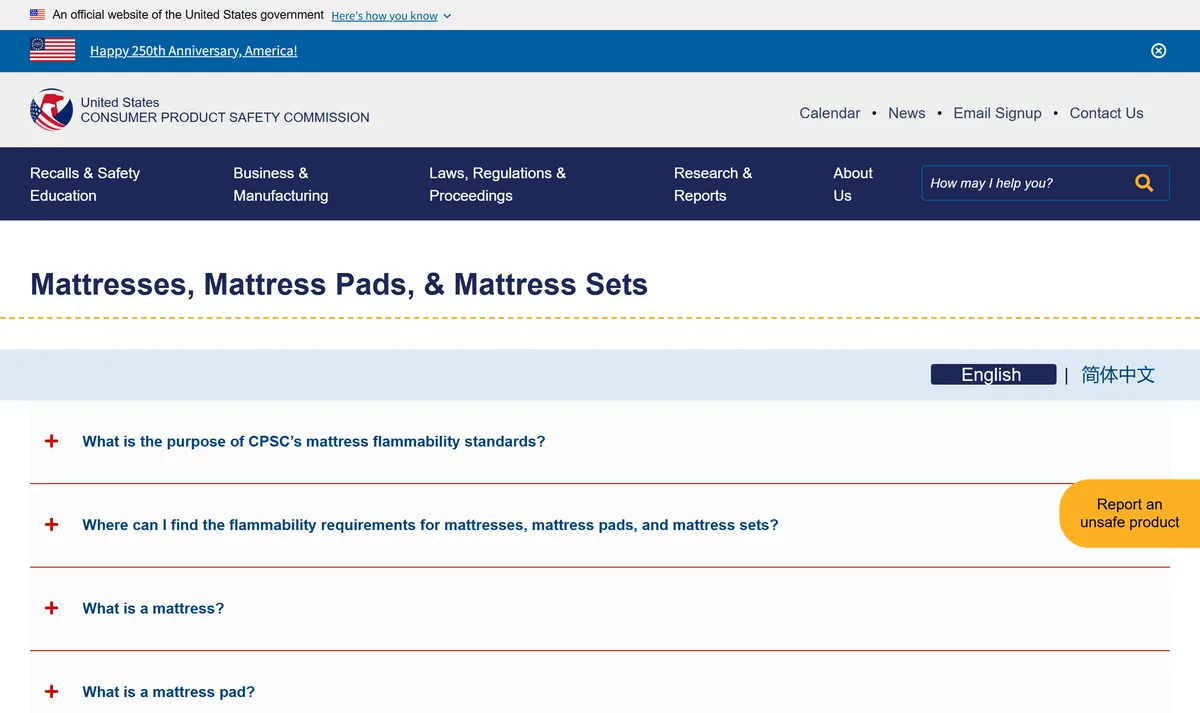
Mattresses, Mattress Pads, & Mattress Sets | CPSC.gov (cpsc.gov). 16 C.F.R. part 1633 addresses open-flame flammability and prescribes a 30-minute test to determine the size. Checked Nov 25, 2026. View source →
16 CFR Part 1633 (eCFR) Standard for the Flammability of Mattress Sets (ecfr.gov). Federal open-flame safety regulation governing all U.S. mattress sets. Checked Nov 25, 2026. View source →
Related Fiberglass Guides
Explore more brand & model fiberglass checks
Compare fire barriers across brands or visit our main Fiberglass Safety Hub for cleanup steps.