Bottom Line:Bassinet mattresses don't have to use chemical flame retardants, but they must pass federal fire tests. You can buy a safe pad that uses wool, cotton, or food-grade fibers instead. Always check the brand's materials before you buy.
Federal Fire Rules
16 CFR 1632 and 1633
Chemical Mandate
None, brands choose barriers
Safe Alternatives
Wool, organic cotton, PLA
Recall Check
Search cpsc.gov before buying
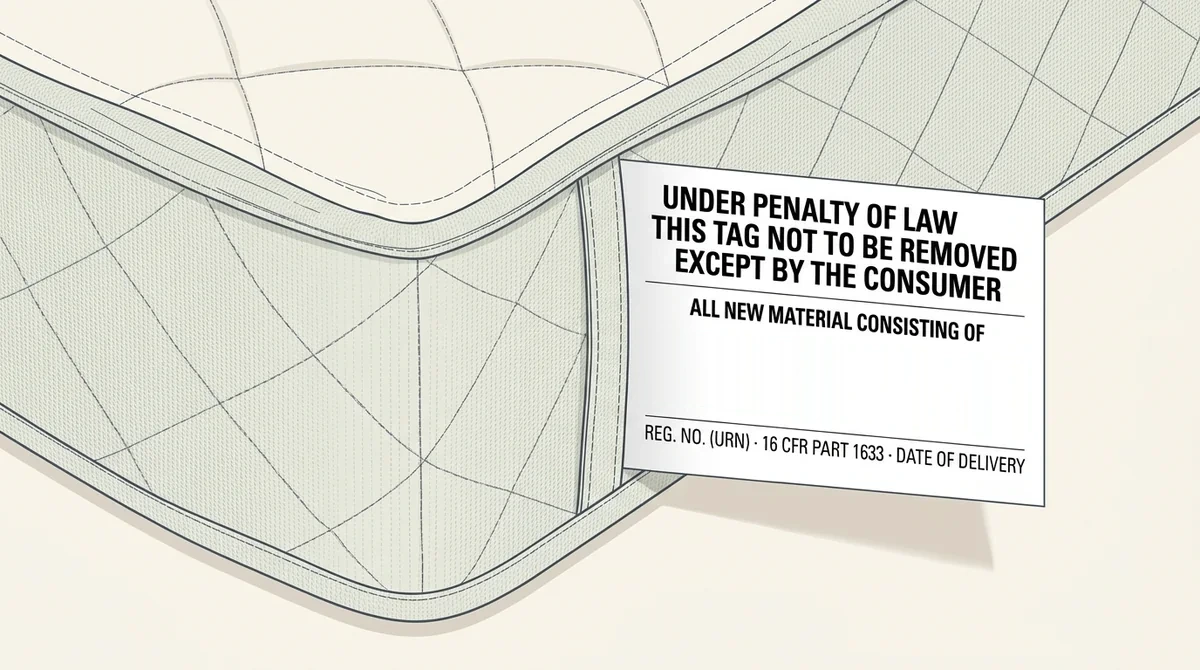
Illustrative Law-Tag Reference (Mattress Safety): Federal rules require a sewn-in tag showing the build date, factory URN, and 16 CFR Part 1633 compliance. A law tag doesn't always name the fire barrier, so confirm with the maker in writing too.
Do bassinet mattresses have to use flame retardants?
No, bassinet mattresses don't have to use chemical flame retardants. U.S. rules require the pad to pass two fire tests, not use a specific chemical. Brands can use natural wool or tight cotton instead of sprayed chemicals.
You'll still see some pads that use chemical sprays or fiberglass socks. Those options are often cheaper to make. That's why it's smart to check the exact fire barrier before you put your baby down to sleep.
How do bassinet fire barriers compare?
Bassinet pads use different materials to pass federal burn tests. Here's how the most common barriers stack up for your baby's sleep space.
Barrier Type
What It Is
What You Should Know
Organic Wool
Natural crimped wool layer
Chars instead of melting, no added chemicals
Tightly Woven Cotton
Dense cotton or cellulose
Passes tests without chemical sprays
Silica or Glass Fiber
Woven fiberglass sock
Can leak sharp fibers if the cover tears
Chemical Spray
Sprayed foam treatments
May off-gas odors in your nursery
What should you check before buying a bassinet pad?
You should read the product specs and ask the brand how the pad passes fire tests. Many law tags omit the inner fire sock, so always confirm with the brand in writing.
Look for clear fiberglass-free and chemical-free claims on the brand's site.
Check the zipper policy so you know if the outer cover is safe to wash.
Search the model name on cpsc.gov to rule out any past safety recalls.
Skip any pad where the brand won't share its fire barrier details.
What should you do next for a safer bassinet?
You can protect your baby by choosing a transparent brand and keeping the cover intact. If you're unsure about a pad you already own, don't unzip the outer cover.
You can also report cover leaks or bad odors at saferproducts.gov. For more help, read our main fiberglass safety guide to see which brands share full material lists.
Mattress fiberglass terms explained in plain English
Seeing terms like “fire sock,” “silica,” “URN,” or “CertiPUR-US” on a bed tag? Here's what each safety term actually means in plain words.
Inner fire sock (FR sock)
It's a thin, stretchy mesh sleeve wrapped tightly around the foam core under the outer cover. It slows open flames, and it can shed glass shards if you unzip or tear the cover.
Assembly zipper vs. washable cover
A zipper on the bottom usually exists for factory assembly, not washing. Don't unzip it unless the care tag clearly says the outer cover is washable.
Glass fiber and core-spun glass
These are common tag names for fiberglass. Treat glass fiber, fiberglass, glass wool, core-spun glass, and glass yarn as the same woven glass material.
Silica-treated rayon vs. fiberglass
Silica-infused rayon chars safely like ash and doesn't shed sharp glass needles. Seeing silica-treated rayon alone isn't the same as woven fiberglass.
CertiPUR-US doesn't mean fiberglass-free
CertiPUR-US only tests the inner foam for VOCs and chemicals, never the fire sock. Finished-product GOTS or GOLS organic standards prohibit fiberglass socks.
6-sided encasement vs. fitted protector
A fitted protector leaves the bottom seam open. Use a 6-sided zippered waterproof encasement if you need to seal a suspect bed completely.
URN and manufacture date
The Uniform Registry Number (like CA-XXXXX) and build date identify the factory and year. You'll need that date to check older pre-transition stock.
16 CFR Part 1632 vs. 1633
Every U.S. bed must pass both federal fire tests. Part 1632 tests smoldering cigarettes, while Part 1633 tests a 30-minute open flame.
Fiberglass-free mattress options to compare
You don't have to guess when shopping for your nursery. These verified options skip fiberglass and harsh chemical sprays.
Advertising disclosure: We may earn a commission if you buy through links or product photos below. It doesn't change what we write. How we make money →
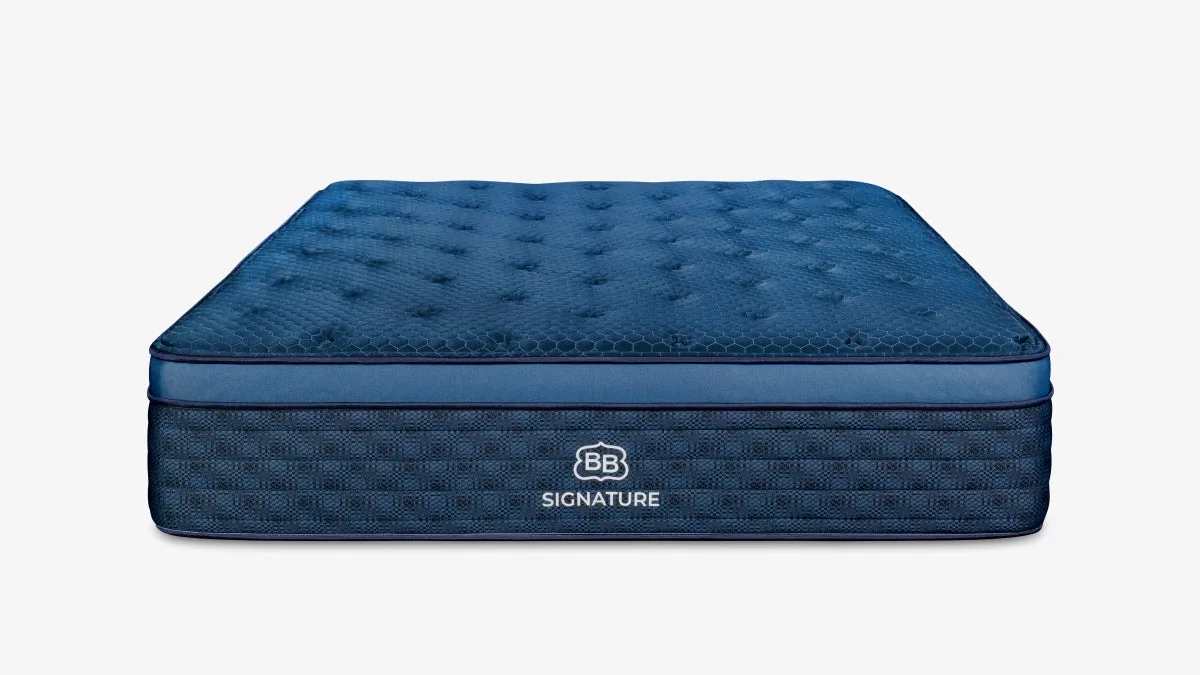
Brooklyn Bedding Signature
Budget Pick · Hybrid · Fiberglass-Free Barrier
$999 Queen · 120-Night Trial · Lifetime Warranty
Why it's fiberglass-free: Brooklyn Bedding states its beds use a fiberglass-free flame barrier in a U.S.-made hybrid.
Best for: Shoppers replacing a boxed foam bed who want a fiberglass-free hybrid around $1,000.
QAre all bassinet mattresses covered by federal fire rules?
Yes, bassinet pads sold in the U.S. must pass 16 CFR Part 1632 and Part 1633. Those rules test smoldering cigarettes and open flames, but they don't force brands to use chemicals.
QCan a bassinet mattress contain fiberglass?
Yes, some budget bassinet pads use a fiberglass sock to pass burn tests. You can avoid it by asking the brand in writing before you buy.
QHow can I tell if my bassinet pad has flame retardants?
You can check the brand's website for a clear material breakdown. If they don't list the fire barrier, email their support team and ask.
QIs wool safe as a bassinet fire barrier?
Yes, wool is a natural fire barrier that meets federal rules without chemical sprays. It's breathable and won't shed sharp glass fibers in your baby's crib.
QWhere can I check if a bassinet pad was recalled?
You can search the brand and model name on cpsc.gov. It's a quick check that takes less than a minute before you buy.
Sources, primary references & how we check
How we check facts: We checked 5 primary government and standards sources on Nov 27, 2026. We don't cut beds open or run a lab. We report what makers publish and what public federal safety files say.
Nappedia Research Team
Primary-Source Fact Checking
Our research team reads federal CPSC rules, state bills, and official safety pages directly at the source.
U.S. CPSC Mattress Flammability Guidance (cpsc.gov). Official federal guidance explaining how U.S. mattresses must pass both 16 CFR Part 1632 smoldering and 16 CFR Part 1633 open-flame tests. Checked Nov 27, 2026. View source →
16 CFR Part 1632 (eCFR) Standard for the Flammability of Mattresses and Mattress Pads (ecfr.gov). Federal smoldering cigarette ignition standard covering U.S. mattresses and mattress pads. Checked Nov 27, 2026. View source →
16 CFR Part 1633 (eCFR) Standard for the Flammability of Mattress Sets (ecfr.gov). Federal open-flame standard requiring U.S. mattress sets to limit peak heat release during a 30-minute burn test. Checked Nov 27, 2026. View source →
U.S. CPSC SaferProducts.gov Incident Reporting Portal (saferproducts.gov). Public federal portal where consumers can report mattress fiberglass leaks, injuries, or cover failures. Checked Nov 27, 2026. View source →
U.S. CPSC Product Recalls Database (cpsc.gov). Official federal recall database for checking mattress, crib mattress, and bedding safety recalls. Checked Nov 27, 2026. View source →
Master Fiberglass Pillar Hub
Check 411 brands, decode your law tag, or run triage
Use our free interactive Law-Tag Decoder, 411-Brand Lookup, 60-Second Triage Wizard, and 50-State Law Tracker.